What’s going on?
WordPress Hosting now open for registrations – again
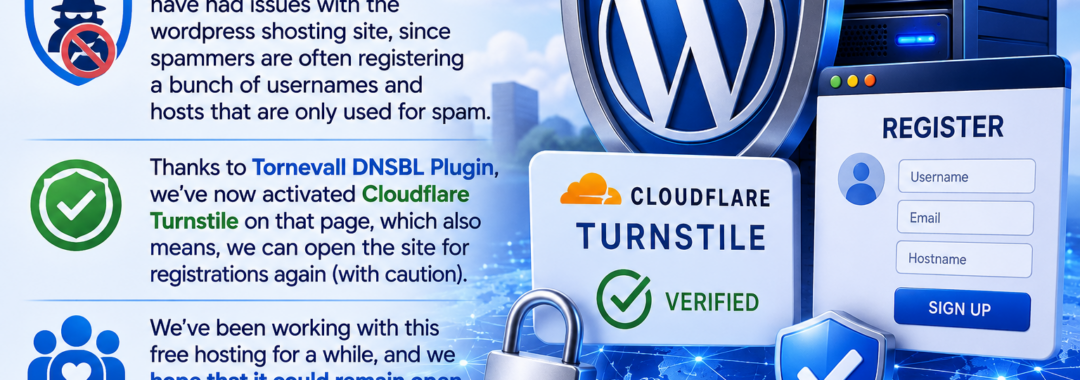
Recently, Tornevall Networks have had issues with the wordpress shosting site, since spammers are often registering a bunch of usernames and hosts that are only used for spam. Thanks to Tornevall DNSBL Plugin, we’ve now activated Cloudflare Turnstile on that page, which also means, we can open the site for registrations again (with caution). We’ve been working with this free hosting for a while, and we hope that it could remain open this time.
Signup are made through the link below:

RSS-Feed – History charset fixed
All mojibake issues in the RSS feed have now been fixed
After previously converting the full system to UTF-8, we have now also cleaned up the remaining mojibake issues in the RSS feed.
These issues were caused by older character encoding problems, where characters such as Swedish å, ä and ö, quotation marks, and other special characters were displayed incorrectly.
At the same time, we have created a script that can fix these issues directly in the database while the system is running. This means that any remaining or newly discovered mojibake issues can be handled live, without having to manually rebuild the RSS feed.
The RSS feed should now be much cleaner and correctly encoded.
#!/usr/bin/env bash
set -euo pipefail

usage() {
    cat <<'EOF'
Usage:
  mojibake.sh --database DB --user USER --table TABLE --columns col1,col2 [options]

Required:
  --database DB              Database/schema name
  --user USER                MySQL/MariaDB user
  --table TABLE              Table name
  --columns col1,col2        Columns to fix, comma-separated

Password:
  --pass PASS                MySQL/MariaDB password
  --ask-pass                 Ask for password
  MYSQL_PWD='secret'         Alternative to --pass

Optional:
  --host HOST                Default: localhost
  --port PORT                Default: 3306
  --pk COLUMN                Numeric primary/range column. Auto-detected if possible.
  --column COLUMN            Add one column. Can be repeated.
  --json-columns col1,col2   Treat these columns as JSON text and escape double quotes.
  --json-column COLUMN       Add one JSON text column. Can be repeated.
  --batch-size N             Default: 5000
  --sample-limit N           Default: 2
  --sample-batches N         Default: 3
  --backup-dir DIR           Default: ./mysql-backups
  --apply                    Actually update rows. Default is dry-run.
  --dry-run                  Only scan and show progress.
  --no-backup                Do not create mysqldump backup. Not recommended.
  --help                     Show this help.

Examples:
  mojibake.sh --database rss --user root --ask-pass --table content --columns json,title,description --dry-run

  mojibake.sh --database rss --user root --ask-pass --table content --columns json,title,description --json-columns json --batch-size 5000 --apply

  mojibake.sh --database rss --user root --ask-pass --table content --pk id --columns json,title,description --apply
EOF
}

die() {
    echo "Error: $*" >&2
    echo >&2
    usage >&2
    exit 1
}

trim() {
    local value="$*"
    value="${value#"${value%%[![:space:]]*}"}"
    value="${value%"${value##*[![:space:]]}"}"
    printf '%s' "$value"
}

quote_ident() {
    local value="$1"
    value="${value//\`/\`\`}"
    printf '`%s`' "$value"
}

sql_string() {
    local value="$1"
    value="${value//\\/\\\\}"
    value="${value//\'/\'\'}"
    printf "'%s'" "$value"
}

add_csv_columns() {
    local csv="$1"
    local target_array_name="$2"
    local item
    local clean
    local items

    IFS=',' read -r -a items <<< "$csv"
    for item in "${items[@]}"; do
        clean="$(trim "$item")"
        [[ -z "$clean" ]] && continue
        eval "$target_array_name+=(\"\$clean\")"
    done
}

join_sql() {
    local separator="$1"
    shift
    local output=""
    local item

    for item in "$@"; do
        if [[ -z "$output" ]]; then
            output="$item"
        else
            output+="$separator$item"
        fi
    done

    printf '%s' "$output"
}

contains_column() {
    local needle="$1"
    shift
    local item

    for item in "$@"; do
        [[ "$item" == "$needle" ]] && return 0
    done

    return 1
}

is_integer_type() {
    local data_type="$1"

    case "$data_type" in
        tinyint|smallint|mediumint|int|integer|bigint)
            return 0
            ;;
        *)
            return 1
            ;;
    esac
}

DATABASE=""
MYSQL_USER_NAME=""
MYSQL_PASSWORD_VALUE=""
MYSQL_PASSWORD_PROVIDED=0
ASK_PASS=0
HOST="localhost"
PORT="3306"
TABLE=""
PK_COLUMN=""
BACKUP_DIR="./mysql-backups"
MODE="dry-run"
DO_BACKUP=1
BATCH_SIZE=5000
SAMPLE_LIMIT=2
SAMPLE_BATCHES=3
FIX_COLUMNS=()
JSON_FIX_COLUMNS=()

if [[ $# -eq 0 ]]; then
    usage
    exit 1
fi

while [[ $# -gt 0 ]]; do
    case "$1" in
        --database)
            [[ $# -ge 2 ]] || die "Missing value for --database"
            DATABASE="$2"
            shift 2
            ;;
        --database=*)
            DATABASE="${1#*=}"
            shift
            ;;
        --user)
            [[ $# -ge 2 ]] || die "Missing value for --user"
            MYSQL_USER_NAME="$2"
            shift 2
            ;;
        --user=*)
            MYSQL_USER_NAME="${1#*=}"
            shift
            ;;
        --pass|--password)
            [[ $# -ge 2 ]] || die "Missing value for --pass"
            MYSQL_PASSWORD_VALUE="$2"
            MYSQL_PASSWORD_PROVIDED=1
            shift 2
            ;;
        --pass=*|--password=*)
            MYSQL_PASSWORD_VALUE="${1#*=}"
            MYSQL_PASSWORD_PROVIDED=1
            shift
            ;;
        --ask-pass)
            ASK_PASS=1
            shift
            ;;
        --host)
            [[ $# -ge 2 ]] || die "Missing value for --host"
            HOST="$2"
            shift 2
            ;;
        --host=*)
            HOST="${1#*=}"
            shift
            ;;
        --port)
            [[ $# -ge 2 ]] || die "Missing value for --port"
            PORT="$2"
            shift 2
            ;;
        --port=*)
            PORT="${1#*=}"
            shift
            ;;
        --table)
            [[ $# -ge 2 ]] || die "Missing value for --table"
            TABLE="$2"
            shift 2
            ;;
        --table=*)
            TABLE="${1#*=}"
            shift
            ;;
        --pk)
            [[ $# -ge 2 ]] || die "Missing value for --pk"
            PK_COLUMN="$2"
            shift 2
            ;;
        --pk=*)
            PK_COLUMN="${1#*=}"
            shift
            ;;
        --columns)
            [[ $# -ge 2 ]] || die "Missing value for --columns"
            add_csv_columns "$2" FIX_COLUMNS
            shift 2
            ;;
        --columns=*)
            add_csv_columns "${1#*=}" FIX_COLUMNS
            shift
            ;;
        --column)
            [[ $# -ge 2 ]] || die "Missing value for --column"
            FIX_COLUMNS+=("$2")
            shift 2
            ;;
        --column=*)
            FIX_COLUMNS+=("${1#*=}")
            shift
            ;;
        --json-columns)
            [[ $# -ge 2 ]] || die "Missing value for --json-columns"
            add_csv_columns "$2" JSON_FIX_COLUMNS
            shift 2
            ;;
        --json-columns=*)
            add_csv_columns "${1#*=}" JSON_FIX_COLUMNS
            shift
            ;;
        --json-column)
            [[ $# -ge 2 ]] || die "Missing value for --json-column"
            JSON_FIX_COLUMNS+=("$2")
            shift 2
            ;;
        --json-column=*)
            JSON_FIX_COLUMNS+=("${1#*=}")
            shift
            ;;
        --batch-size)
            [[ $# -ge 2 ]] || die "Missing value for --batch-size"
            BATCH_SIZE="$2"
            shift 2
            ;;
        --batch-size=*)
            BATCH_SIZE="${1#*=}"
            shift
            ;;
        --sample-limit)
            [[ $# -ge 2 ]] || die "Missing value for --sample-limit"
            SAMPLE_LIMIT="$2"
            shift 2
            ;;
        --sample-limit=*)
            SAMPLE_LIMIT="${1#*=}"
            shift
            ;;
        --sample-batches)
            [[ $# -ge 2 ]] || die "Missing value for --sample-batches"
            SAMPLE_BATCHES="$2"
            shift 2
            ;;
        --sample-batches=*)
            SAMPLE_BATCHES="${1#*=}"
            shift
            ;;
        --backup-dir)
            [[ $# -ge 2 ]] || die "Missing value for --backup-dir"
            BACKUP_DIR="$2"
            shift 2
            ;;
        --backup-dir=*)
            BACKUP_DIR="${1#*=}"
            shift
            ;;
        --apply)
            MODE="apply"
            shift
            ;;
        --dry-run)
            MODE="dry-run"
            shift
            ;;
        --no-backup)
            DO_BACKUP=0
            shift
            ;;
        --help|-h)
            usage
            exit 0
            ;;
        *)
            die "Unknown option: $1"
            ;;
    esac
done

[[ -n "$DATABASE" ]] || die "--database is required"
[[ -n "$MYSQL_USER_NAME" ]] || die "--user is required"
[[ -n "$TABLE" ]] || die "--table is required"
[[ "${#FIX_COLUMNS[@]}" -gt 0 ]] || die "--columns or --column is required"
[[ "$BATCH_SIZE" =~ ^[0-9]+$ ]] || die "--batch-size must be numeric"
[[ "$SAMPLE_LIMIT" =~ ^[0-9]+$ ]] || die "--sample-limit must be numeric"
[[ "$SAMPLE_BATCHES" =~ ^[0-9]+$ ]] || die "--sample-batches must be numeric"
[[ "$BATCH_SIZE" -gt 0 ]] || die "--batch-size must be greater than 0"

if [[ "$ASK_PASS" -eq 1 ]]; then
    read -r -s -p "MySQL password: " MYSQL_PASSWORD_VALUE
    echo
    MYSQL_PASSWORD_PROVIDED=1
fi

if [[ "$MYSQL_PASSWORD_PROVIDED" -eq 1 ]]; then
    export MYSQL_PWD="$MYSQL_PASSWORD_VALUE"
elif [[ -z "${MYSQL_PWD:-}" ]]; then
    die "--pass, --ask-pass, or MYSQL_PWD is required"
fi

MYSQL=(
    mysql
    --default-character-set=utf8mb4
    -h "$HOST"
    -P "$PORT"
    -u "$MYSQL_USER_NAME"
    --database="$DATABASE"
    --batch
    --raw
    --silent
)

MYSQLDUMP=(
    mysqldump
    --default-character-set=utf8mb4
    -h "$HOST"
    -P "$PORT"
    -u "$MYSQL_USER_NAME"
    --single-transaction
    --quick
)

TEXT_MAP='
c383c2a5 c3a5
c383c2a4 c3a4
c383c2b6 c3b6
c383e280a6 c385
c383c285 c385
c383e2809e c384
c383c284 c384
c383e28093 c396
c383c296 c396
c383c2a9 c3a9
c383c2a8 c3a8
c383c2a1 c3a1
c383c2b3 c3b3
c383c2b2 c3b2
c383c2ba c3ba
c383c2b9 c3b9
c383c2bc c3bc
c383c2b1 c3b1
c383c2b8 c3b8
c383c2a6 c3a6
c383c2a7 c3a7
c383e280b0 c389
c383c289 c389
c383cb86 c388
c383c288 c388
c383c281 c381
c383c293 c393
c383e2809c c393
c383c292 c392
c383e28099 c392
c383c39a c39a
c383c5a1 c39a
c383c39c c39c
c383c593 c39c
c383c291 c391
c383e28098 c391
c383c398 c398
c383cb9c c398
c383c386 c386
c383e280a0 c386
c383c387 c387
c383e280a1 c387
c3a2e282acc593 22
c3a2c280c29c 22
c3a2e282acc29d 22
c3a2c280c29d 22
c3a2e282accb9c 27
c3a2c280c298 27
c3a2e282ace284a2 27
c3a2c280c299 27
c3a2e282ace2809c 2d
c3a2c280c293 2d
c3a2e282ace2809d 2d
c3a2c280c294 2d
c3a2e282acc2a6 2e2e2e
c3a2c280c2a6 2e2e2e
c3a2e282acc2a2 2d
c3a2c280c2a2 2d
c3a2e2809ec2a2 e284a2
c3a2c284c2a2 e284a2
c3a2e2809ac2ac e282ac
c3a2c282c2ac e282ac
c382c2a0 20
c382c2a7 c2a7
c382c2a9 c2a9
c382c2ae c2ae
c382c2b0 c2b0
c382c2b1 c2b1
c382c2ab c2ab
c382c2bb c2bb
'

JSON_MAP='
c383c2a5 c3a5
c383c2a4 c3a4
c383c2b6 c3b6
c383e280a6 c385
c383c285 c385
c383e2809e c384
c383c284 c384
c383e28093 c396
c383c296 c396
c383c2a9 c3a9
c383c2a8 c3a8
c383c2a1 c3a1
c383c2b3 c3b3
c383c2b2 c3b2
c383c2ba c3ba
c383c2b9 c3b9
c383c2bc c3bc
c383c2b1 c3b1
c383c2b8 c3b8
c383c2a6 c3a6
c383c2a7 c3a7
c383e280b0 c389
c383c289 c389
c383cb86 c388
c383c288 c388
c383c281 c381
c383c293 c393
c383e2809c c393
c383c292 c392
c383e28099 c392
c383c39a c39a
c383c5a1 c39a
c383c39c c39c
c383c593 c39c
c383c291 c391
c383e28098 c391
c383c398 c398
c383cb9c c398
c383c386 c386
c383e280a0 c386
c383c387 c387
c383e280a1 c387
c3a2e282acc593 5c22
c3a2c280c29c 5c22
c3a2e282acc29d 5c22
c3a2c280c29d 5c22
c3a2e282accb9c 27
c3a2c280c298 27
c3a2e282ace284a2 27
c3a2c280c299 27
c3a2e282ace2809c 2d
c3a2c280c293 2d
c3a2e282ace2809d 2d
c3a2c280c294 2d
c3a2e282acc2a6 2e2e2e
c3a2c280c2a6 2e2e2e
c3a2e282acc2a2 2d
c3a2c280c2a2 2d
c3a2e2809ec2a2 e284a2
c3a2c284c2a2 e284a2
c3a2e2809ac2ac e282ac
c3a2c282c2ac e282ac
c382c2a0 20
c382c2a7 c2a7
c382c2a9 c2a9
c382c2ae c2ae
c382c2b0 c2b0
c382c2b1 c2b1
c382c2ab c2ab
c382c2bb c2bb
'

build_replace_expr() {
    local column="$1"
    local map="$2"
    local quoted_column
    local expr
    local bad_hex
    local good_hex

    quoted_column="$(quote_ident "$column")"
    expr="CAST(${quoted_column} AS CHAR CHARACTER SET utf8mb4)"

    while read -r bad_hex good_hex; do
        [[ -z "${bad_hex:-}" ]] && continue
        expr="REPLACE(${expr}, CONVERT(0x${bad_hex} USING utf8mb4), CONVERT(0x${good_hex} USING utf8mb4))"
    done <<< "$map"

    printf '%s' "$expr"
}

build_column_where() {
    local column="$1"
    local map="$2"
    local quoted_column
    local expr
    local bad_hex
    local good_hex

    quoted_column="$(quote_ident "$column")"
    expr="CAST(${quoted_column} AS CHAR CHARACTER SET utf8mb4)"

    while read -r bad_hex good_hex; do
        [[ -z "${bad_hex:-}" ]] && continue
        printf 'LOCATE(CONVERT(0x%s USING utf8mb4), %s) > 0\n' "$bad_hex" "$expr"
    done <<< "$map"
}

column_data_type() {
    local column="$1"

    "${MYSQL[@]}" -N -e "
        SELECT DATA_TYPE
        FROM information_schema.COLUMNS
        WHERE TABLE_SCHEMA = $(sql_string "$DATABASE")
          AND TABLE_NAME = $(sql_string "$TABLE")
          AND COLUMN_NAME = $(sql_string "$column")
        LIMIT 1;
    "
}

detect_single_numeric_pk() {
    local pk_count
    local pk_name
    local pk_type

    pk_count="$("${MYSQL[@]}" -N -e "
        SELECT COUNT(*)
        FROM information_schema.KEY_COLUMN_USAGE
        WHERE TABLE_SCHEMA = $(sql_string "$DATABASE")
          AND TABLE_NAME = $(sql_string "$TABLE")
          AND CONSTRAINT_NAME = 'PRIMARY';
    ")"

    [[ "$pk_count" == "1" ]] || return 1

    read -r pk_name pk_type < <("${MYSQL[@]}" -N -e "
        SELECT k.COLUMN_NAME, c.DATA_TYPE
        FROM information_schema.KEY_COLUMN_USAGE k
        JOIN information_schema.COLUMNS c
          ON c.TABLE_SCHEMA = k.TABLE_SCHEMA
         AND c.TABLE_NAME = k.TABLE_NAME
         AND c.COLUMN_NAME = k.COLUMN_NAME
        WHERE k.TABLE_SCHEMA = $(sql_string "$DATABASE")
          AND k.TABLE_NAME = $(sql_string "$TABLE")
          AND k.CONSTRAINT_NAME = 'PRIMARY'
        LIMIT 1;
    ")

    if is_integer_type "$pk_type"; then
        printf '%s' "$pk_name"
        return 0
    fi

    return 1
}

echo "Checking connection and table metadata..."
"${MYSQL[@]}" -e "SET NAMES utf8mb4; SELECT 1;" >/dev/null

if [[ -z "$PK_COLUMN" ]]; then
    if PK_COLUMN="$(detect_single_numeric_pk)"; then
        echo "Range column: $PK_COLUMN (auto-detected primary key)"
    else
        die "Could not auto-detect a single numeric primary key. Use --pk id or another indexed numeric column."
    fi
else
    pk_type="$(column_data_type "$PK_COLUMN")"
    [[ -n "$pk_type" ]] || die "PK/range column does not exist: ${DATABASE}.${TABLE}.${PK_COLUMN}"
    is_integer_type "$pk_type" || die "--pk column must be numeric/integer, got: $PK_COLUMN ($pk_type)"
    echo "Range column: $PK_COLUMN (manual)"
fi

TARGET="$(quote_ident "$DATABASE").$(quote_ident "$TABLE")"
QUOTED_PK="$(quote_ident "$PK_COLUMN")"

SET_PARTS=()
WHERE_PARTS=()
SAMPLE_COLUMNS=()

for column in "${FIX_COLUMNS[@]}"; do
    column="$(trim "$column")"
    [[ -z "$column" ]] && continue

    data_type="$(column_data_type "$column")"
    [[ -n "$data_type" ]] || die "Column does not exist: ${DATABASE}.${TABLE}.${column}"

    map="$TEXT_MAP"
    mode_label="text"

    if [[ "$data_type" == "json" ]] || contains_column "$column" "${JSON_FIX_COLUMNS[@]}"; then
        map="$JSON_MAP"
        mode_label="json"
    fi

    echo "Column: $column ($data_type, $mode_label mode)"

    SET_PARTS+=("$(quote_ident "$column") = $(build_replace_expr "$column" "$map")")
    SAMPLE_COLUMNS+=("LEFT(CAST($(quote_ident "$column") AS CHAR CHARACTER SET utf8mb4), 220) AS $(quote_ident "$column")")

    while IFS= read -r condition; do
        [[ -z "$condition" ]] && continue
        WHERE_PARTS+=("$condition")
    done < <(build_column_where "$column" "$map")
done

[[ "${#SET_PARTS[@]}" -gt 0 ]] || die "No usable columns found"
[[ "${#WHERE_PARTS[@]}" -gt 0 ]] || die "No replacement map loaded"

SET_SQL="$(join_sql $',\n    ' "${SET_PARTS[@]}")"
WHERE_SQL="$(join_sql $' OR\n        ' "${WHERE_PARTS[@]}")"
SAMPLE_SQL="$(join_sql $',\n        ' "${SAMPLE_COLUMNS[@]}")"

read -r PK_MIN PK_MAX < <("${MYSQL[@]}" -N -e "
    SET NAMES utf8mb4;
    SELECT COALESCE(MIN(${QUOTED_PK}), 0), COALESCE(MAX(${QUOTED_PK}), 0)
    FROM ${TARGET};
")

if [[ "$PK_MIN" == "0" && "$PK_MAX" == "0" ]]; then
    echo "Table appears empty. Nothing to do."
    exit 0
fi

TOTAL_SPAN=$((PK_MAX - PK_MIN + 1))
if [[ "$TOTAL_SPAN" -le 0 ]]; then
    die "Invalid range: min=$PK_MIN max=$PK_MAX"
fi

echo
echo "Mode: $MODE"
echo "Target: ${DATABASE}.${TABLE}"
echo "Range: ${PK_COLUMN} ${PK_MIN}..${PK_MAX}"
echo "Batch size: $BATCH_SIZE"
echo

if [[ "$MODE" == "apply" && "$DO_BACKUP" -eq 1 ]]; then
    mkdir -p "$BACKUP_DIR"
    BACKUP_FILE="${BACKUP_DIR}/${DATABASE}.${TABLE}.before-mojibake-fix.$(date +%Y%m%d-%H%M%S).sql"

    echo "Creating backup: $BACKUP_FILE"

    if command -v pv >/dev/null 2>&1; then
        "${MYSQLDUMP[@]}" "$DATABASE" "$TABLE" | pv -b -r -t > "$BACKUP_FILE"
    else
        echo "Tip: install pv if you want byte progress during backup."
        "${MYSQLDUMP[@]}" "$DATABASE" "$TABLE" > "$BACKUP_FILE"
    fi

    echo "Backup done."
    echo
elif [[ "$MODE" == "apply" ]]; then
    echo "Backup disabled with --no-backup. Continuing without dump."
    echo
fi

CURRENT_START="$PK_MIN"
BATCH_NO=0
TOTAL_MATCHES=0
TOTAL_CHANGED=0
SAMPLES_SHOWN=0

while [[ "$CURRENT_START" -le "$PK_MAX" ]]; do
    CURRENT_END=$((CURRENT_START + BATCH_SIZE - 1))
    if [[ "$CURRENT_END" -gt "$PK_MAX" ]]; then
        CURRENT_END="$PK_MAX"
    fi

    BATCH_NO=$((BATCH_NO + 1))
    PROCESSED_SPAN=$((CURRENT_END - PK_MIN + 1))
    PERCENT=$((PROCESSED_SPAN * 100 / TOTAL_SPAN))

    BATCH_WHERE="
        ${QUOTED_PK} BETWEEN ${CURRENT_START} AND ${CURRENT_END}
        AND (
        ${WHERE_SQL}
        )
    "

    MATCHES="$("${MYSQL[@]}" -N -e "
        SET NAMES utf8mb4;
        SELECT COUNT(*)
        FROM ${TARGET}
        WHERE ${BATCH_WHERE};
    ")"

    TOTAL_MATCHES=$((TOTAL_MATCHES + MATCHES))

    if [[ "$MODE" == "apply" ]]; then
        CHANGED="$("${MYSQL[@]}" -N -e "
            SET NAMES utf8mb4;
            START TRANSACTION;
            UPDATE ${TARGET}
            SET
                ${SET_SQL}
            WHERE ${BATCH_WHERE};
            SELECT ROW_COUNT();
            COMMIT;
        ")"

        TOTAL_CHANGED=$((TOTAL_CHANGED + CHANGED))

        printf '[%s] Batch %d | %s=%s..%s | %3d%% | matches=%s | changed=%s | total_changed=%s\n' \
            "$(date '+%H:%M:%S')" \
            "$BATCH_NO" \
            "$PK_COLUMN" \
            "$CURRENT_START" \
            "$CURRENT_END" \
            "$PERCENT" \
            "$MATCHES" \
            "$CHANGED" \
            "$TOTAL_CHANGED"
    else
        printf '[%s] Batch %d | %s=%s..%s | %3d%% | matches=%s | total_matches=%s\n' \
            "$(date '+%H:%M:%S')" \
            "$BATCH_NO" \
            "$PK_COLUMN" \
            "$CURRENT_START" \
            "$CURRENT_END" \
            "$PERCENT" \
            "$MATCHES" \
            "$TOTAL_MATCHES"
    fi

    if [[ "$MATCHES" -gt 0 && "$SAMPLES_SHOWN" -lt "$SAMPLE_BATCHES" && "$SAMPLE_LIMIT" -gt 0 ]]; then
        SAMPLES_SHOWN=$((SAMPLES_SHOWN + 1))
        echo "Sample batch $SAMPLES_SHOWN:"
        "${MYSQL[@]}" -e "
            SET NAMES utf8mb4;
            SELECT
                ${QUOTED_PK} AS pk,
                ${SAMPLE_SQL}
            FROM ${TARGET}
            WHERE ${BATCH_WHERE}
            LIMIT ${SAMPLE_LIMIT};
        "
        echo
    fi

    CURRENT_START=$((CURRENT_END + 1))
done

echo
echo "Finished."
echo "Total matching rows seen: $TOTAL_MATCHES"

if [[ "$MODE" == "apply" ]]; then
    echo "Total changed rows: $TOTAL_CHANGED"
else
    echo "Dry-run only. Re-run with --apply to update data."
fi
Support our work with Tornevall Tools
Tornevall Tools is growing with DNS tools, fact checking, OpenAI-powered services, and upcoming Microsoft Copilot-based features.
Keeping the platform running costs money. Hosting, servers, maintenance, development, and AI usage all add up over time.
If you want to help keep Tornevall Tools available, stable, and improving, you can support the project here:
GoFundMe:
https://gofund.me/13bed61f4
Ko-fi memberships and subscriptions:
https://ko-fi.com/tornevall/
Ko-fi is especially useful for ongoing support. Memberships and subscriptions help cover recurring costs and make it easier to keep paid or resource-heavy features available over time.
Thank you for helping keep Tornevall Tools running and improving.
DNSBL cloudflare turnstile fixed
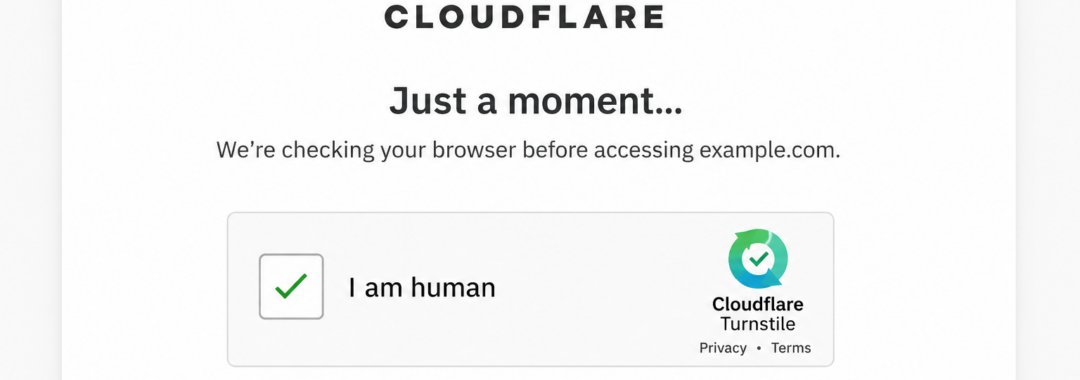
We’ve been using turnstile for a while, with the DNSBL, to protect against spam. That turnstile was broken. It has now been fixed and released to the official DNSBL package at wordpress.

SocialGPT 1.2.19: clearer verifications, saved fact cards, and better debugging
SocialGPT 1.2.19 makes fact verifications easier to review, easier to share, and much less frustrating when something is slow or behaving strangely.
This update mainly focuses on three things:
- better control over Verify fact
- saved verifications you can reopen later
- clearer visibility when you want to understand what is happening in the background
What’s new?
Fact verifications are now saved automatically
When a verification succeeds, it is now saved as a real fact card in your Tools account. That means you no longer have to run the same check again just because you want to read the result later.
This makes it easier to:
- go back to an earlier verification
- review the sources at your own pace
- compare multiple verifications over time
- share a saved result afterwards
Share links for saved verifications
Saved fact cards can now get a public share link. In practice, this means you can run a verification once, save the result, and then open or share that same version again without having to run it again.
This is especially useful when you want to:
- show a finished verification result to someone else
- save a reference to an important check
- reuse the same result in follow-ups or documentation
Fact cards now have a better reading format
Saved verification cards are now shown in a more editorial and readable format instead of feeling like a raw text dump.
Markdown is also supported better, which makes headings, lists, links, and simple structure much clearer when a card is reopened or shared publicly.
In short: results now feel more like finished articles and less like internal debug text.
New discreet debug panel in verification view
If you want to understand why a verification is taking time or acting strangely, there is now a small dbg opener directly inside the verification box.
It shows things like:
- which phase the verification is in
- how long different parts take
- request token and timeout
- transport details between the extension and Tools
- a compact preview of the response or error
This is mainly for troubleshooting and follow-up, without making the normal verification UI noisy for everyone else.
Verify fact timeout behaves better
A slow or stuck verification should no longer keep counting forever without actually ending.
In 1.2.19, the verification flow now uses the same timeout logic as the other AI calls in the toolbox. That makes stuck verifications easier to catch and makes it clearer when a response is simply not coming back.
The debug panel is easier to use
The new debug panel also received important usability fixes:
- it can be opened without getting caught by the drag behavior of the box
- it has its own scroll when the information gets long
- the content is easier to read and copy
For people using Facebook admin and review workflows
This release also continues improving visibility in Facebook-related workflows.
Among other things, the admin overlay is clearer with:
- visible queue and dedupe status directly in the panel
- better presentation of the latest batch result
- clearer marking when scrolling has reached content that is already known or already sent
That makes it easier to see what is actually happening without having to guess.
Short summary
SocialGPT 1.2.19 makes Verify fact more practical in day-to-day use:
- verifications can be saved and reopened
- saved results can be shared
- fact cards are easier to read
- timeout behavior is better
- there is now a built-in debug surface for people who need more insight
This release is mainly about improving the workflow after the verification itself — not just the answer you get, but how easy it is to understand, save, reuse, and troubleshoot it.